


Three-Phase High Voltage Hybrid Inverter: Managing Unbalanced Loads in Commercial Buildings
A 30kW three-phase inverter may appear sufficient for a commercial building drawing just 17kW. Yet if 12kW is concentrated on one phase, that phase alone draws approximately 58A at 230V and a 0.9 power factor. The other two phases may remain lightly loaded while the inverter approaches its asymmetric output-current limit.
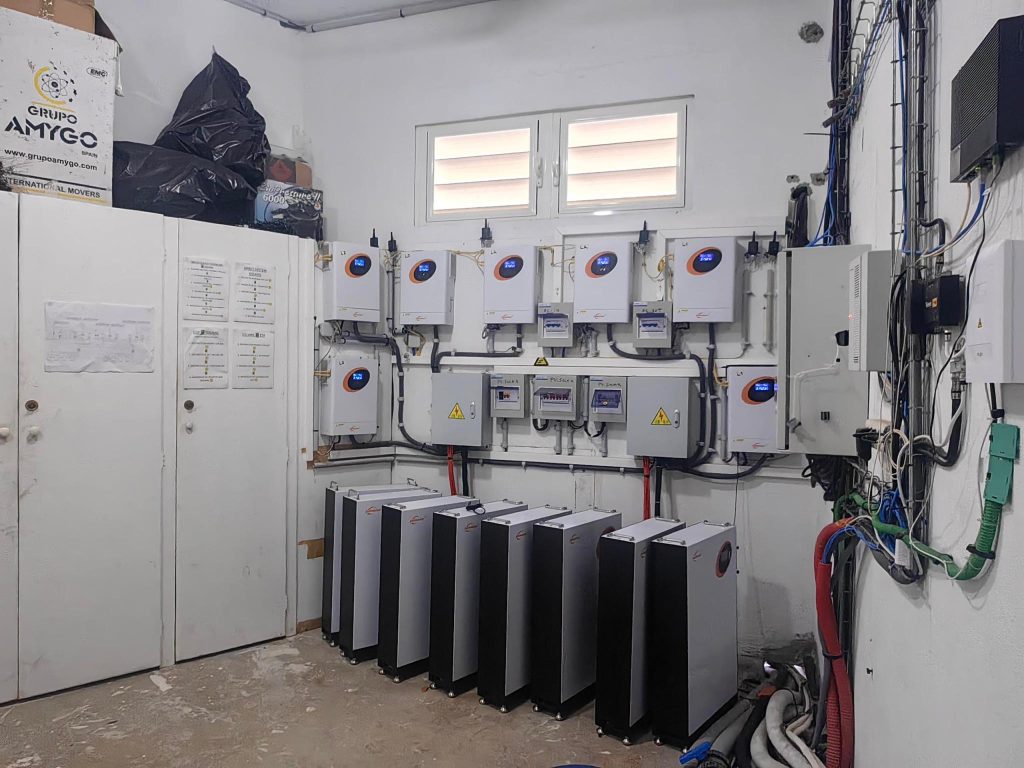
This creates a sizing problem that total kilowatt ratings cannot resolve. Refrigeration compressors, HVAC equipment, lighting circuits, and single-phase machinery rarely operate with equal demand across L1, L2, and L3.
For buyers evaluating a Three-Phase High Voltage Hybrid Inverter, the decisive specifications are individual phase-current capability, load response during grid outages, and the battery system's available discharge power.
Why Unbalanced Loads Can Limit Inverter Output
A three-phase inverter converts DC energy to controlled AC waveforms. The limitations of switching devices, output filters, and current-control loops define the inverter's capacity for handling the current in each phase.
When loads are unbalanced, one phase may reach its thermal or current limits before the total output of the inverter reaches its rated value.
Three operating effects require attention:
• Current Concentration: If one phase is heavily loaded, the output will be limited or an overload condition will occur before the inverter's total output reaches its rating.
• Neutral Current: Imbalance in phase currents may cause current to flow in the neutral conductor. 3rd harmonic and other triplen harmonics of non-linear loads may increase the neutral current.
• Voltage Deviation: Single phase currents being unbalanced may cause additional voltage drop in the source and cables. This effect is significant in off-grid inverters if the inverter generates the voltage.
Of the three, Current Concentration is the most likely to occur and limit output. Load Imbalance should be assessed based on measured RMS currents, power factor and demand duration, and not based on active power.
What Does 100% Unbalanced Output Actually Mean?
Most traditional three-phase inverters focus on controlling balanced current injection. Inverters designed for asymmetric operation can limit phase currents based on their control algorithms and hardware limitations.
JSDSolar provides Deye 30kW, 40kW, and 50kW three-phase hybrid inverters for commercial solar storage. Deye specifies 100% unbalanced output for its SG01HP3-EU series, and supports 160 to 800V lithium-ion batteries.
However, this feature does not mean unlimited single-phase loading.
Deye's product specifications provide separate maximum unbalanced output-current figures:
| Model | Rated AC Power | Published Maximum Unbalanced Output Current |
| SUN-30K-SG01HP3-EU-BM3 | 30kW | 60A |
| SUN-40K-SG01HP3-EU-BM4 | 40kW | 70A |
| SUN-50K-SG01HP3-EU-BM4 | 50kW | 83.3A |
These figures come from the manufacturer's Chinese-language product specifications. Their applicability to a particular regional version, firmware configuration, and operating mode must be confirmed before equipment selection.
For the 12kW example, with approximately 58A leaving little margin against a 60A limit, other factors, such as motor starting current, voltage fluctuations, and thermal derating may make the installation unacceptable, even if the aggregated demand is under 30kW.
Increasing the total power rating may provide more phase current capacity, but rebalancing single-phase loads may be more cost effective.
Grid-Connected and Off-Grid Operation Have Different Constraints
Grid Connected Operation
While the utility generally takes care of all grid loads, it is good practice for an installer to calculate the grid loads to assess if the inverter is sized correctly.
Depending on the operating mode and permitted control, a hybrid inverter may be coordinating the photovoltaic generation with battery discharge.
For accurate measurement of phases, the inverter has to be sure that the current transformers are orientated and identified correctly. Additionally, the utility meter should also be configured correctly.
Asymmetric power control should only be used when distributive metering is approved and approved by local utilities.
Backup Operation With Unequal Loading
If the grid disconnects, the inverter is responsible for supplying backup circuits and loads.
A phase carrying several refrigeration compressors may experience a brief current peak as the motors restart. If the surge exceeds the inverter's available phase-current or transient capability, output voltage may collapse or protection may disconnect the load.
The Deye SG01HP3-EU series specifies off-grid peak power of 1.5 times rated power for 10 seconds. This is a total-system surge specification, not proof that the entire surge capacity can be delivered through one phase.
Critical-load selection should account for motor starting methods, simultaneous restart sequences, and the inverter's confirmed per-phase overload limits.
Can the High-Voltage Battery Supply the Required AC Power?
Battery voltage affects DC-side current and conversion losses, but it does not directly determine how unbalanced AC power is distributed.
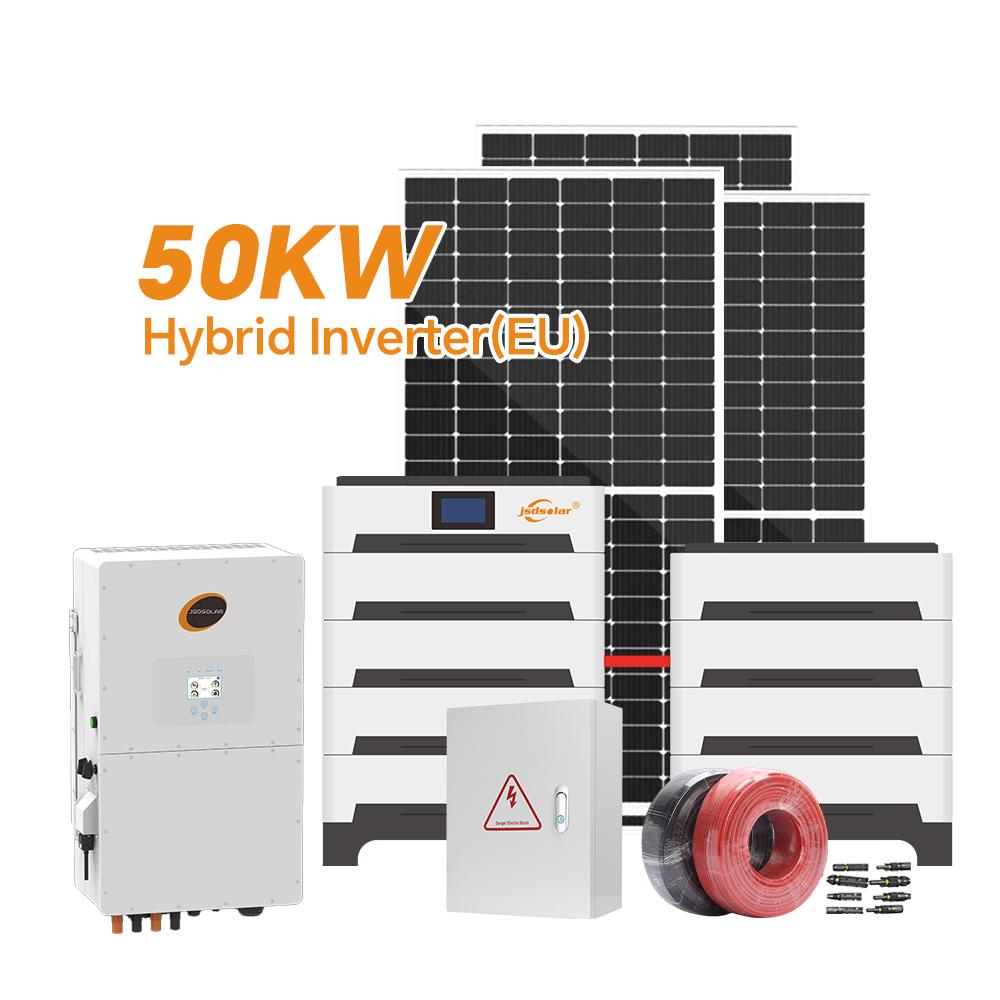
JSDSolar's Deye series supports a 160–800V battery operating range and two battery inputs, each with a published maximum discharge-current rating of 50A.
At 160V and a combined 100A discharge, available DC power would be 16kW, assuming both inputs deliver their rated current.
Therefore, while a wide input voltage range is good, a full inverter output at all battery voltages cannot be guaranteed.
Some things engineers should analyze are:
• Battery Management System (BMS) Discharge Limits: These limits may change due to low state of charge, elevated cell temperatures and/or battery protection settings.
• Battery Voltage under Load: Voltage sag may decrease the DC power available to the load.
• PV and battery coordination: PV input may complement battery discharge, however, its contribution may not be guaranteed during long outages or poor irradiation conditions.
• Battery communication and the actual power discharge capability deserve more attention as compared to nominal energy storage capacity.
What is the Best Way to Verify Phase Imbalance Before Commissioning?
A building connected load schedule helps the designer determine the sizes of electrical equipment during the preliminary design phase. Measured demand helps evaluate how loads operate together and how loads change with respect to time.
A reasonable verification process is as follows:
• Measure and record demand. Record phase-to-neutral voltages, phase currents, and power, neutral current, and phase angles. Record operating conditions.
• Review circuit allocation. Identify single phase loads and evaluate if circuit re-balancing would alleviate phase over-current condition.
• Test unbalance. Apply unequal loads and evaluate protection limits and responders, as well as regulation.
• Verify backup. Test backup circuits and evaluate limits and responders, as well as regulation.
• Non-linear loads require more harmonic measurements. A phase-current balance that appears acceptable at the fundamental frequency may still cause excessive neutral heating.
Ambient temperature is also relevant. Deye mentions that output derating begins at 45°C for this inverter series, meaning thermal conditions are relevant for continuous high-load operation.
Specifying a Three-Phase High Voltage Hybrid Inverter with JSDSolar
For commercial projects, JSDSolar suggests evaluating maximum phase currents, along with total load, battery discharge capability and backup operation requirements.
Our Deye 30kW-50kW three-phase hybrid inverter range is a starting point for comparison of these requirements.
Please contact JSDSolar for discussion on potential products that meet your requirements, with regard to your phase-load schedule, battery configuration and backup priorities.
FAQs
Q1. Does JSDSolar offer three-phase high voltage hybrid inverters for commercial buildings?
Yes. JSDSolar offers Deye 30kW, 40kW, and 50kW three-phase hybrid inverters designed for commercial solar storage and high-voltage battery integration.
Q2. Can JSDSolar's three-phase hybrid inverters handle unbalanced loads?
The Deye SG01HP3-EU series supports 100% unbalanced output. Actual load capacity remains subject to individual phase-current and operating limits.
Q3. What battery voltage range do JSDSolar's high-voltage hybrid inverters support?
JSDSolar's 30–50kW Deye models support 160–800V lithium-ion battery systems. Battery voltage and BMS compatibility must be verified before installation.
Q4. Can a 30kW hybrid inverter supply 30kW on one phase?
Not necessarily. Total inverter power does not equal single-phase capacity. Buyers must check the specified maximum unbalanced output current.
Q5. What happens when one phase exceeds its current limit?
The inverter may limit output or activate overload protection, depending on operating conditions. JSDSolar recommends checking individual phase demand before sizing.


