


10kW Solar Panel System With 48V 200Ah Battery: Backup Runtime Guide
A buyer specifying eight hours of backup for a continuous 3kW load needs 24kWh delivered to the AC circuits. A single 48V 200Ah battery cannot meet that requirement, even when connected to a 10kW inverter.
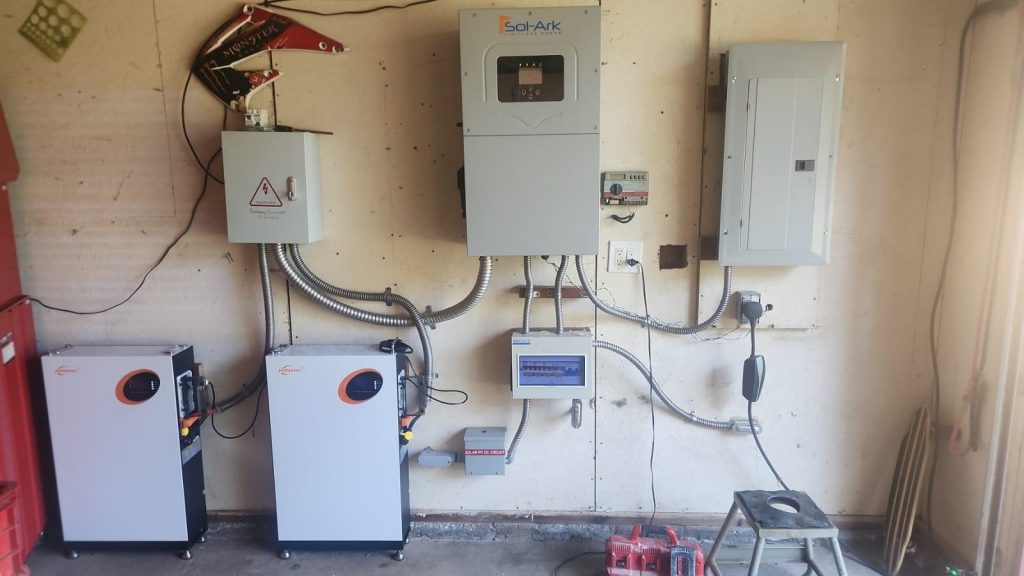
This mismatch often appears during solar-storage procurement. Inverter power determines how much equipment can operate simultaneously; battery energy determines how long it can operate.
The JSDSolar 10 kW Solar Panel System comes with a 10 kW split-phase inverter, 12 pieces of 580W solar modules and a 48V 200Ah lithium battery. The limitations of the components must be determined to calculate the backup runtime.
1. How Much Usable Energy Does a 48V 200Ah Battery Provide?
The total capacity of a battery is expressed in Ah (ampere-hours). To determine how long a battery will last in hours, we will divide the battery's total capacity in kWh.
Using the advertised battery rating:
48V × 200Ah ÷ 1,000 = 9.6kWh
This is nominal stored energy, not usable AC output.
The JSDSolar product specifies 80% depth of discharge (DoD). Applying that figure gives approximately 7.68kWh of usable DC energy from a fully charged battery.
If we assume 90% inverter efficiency:
7.68kWh × 0.90 = 6.91kWh usable AC energy
The 90% figure is an engineering assumption, not a published efficiency measurement for this inverter. The calculation also excludes inverter standby consumption and additional battery losses.
The battery nameplate, nominal voltage, and BMS configuration should therefore be confirmed before using either value in a final autonomy calculation.
2. What Backup Runtime Is Realistic at Different Loads?
For battery-only operation, a preliminary estimate is:
Runtime = Usable AC Energy ÷ Average AC Load
Using 6.91kWh as the illustrative available energy:
| Continuous AC load | Estimated runtime | Main engineering consideration |
| 500W | 13.8 hours | Inverter self-consumption becomes more significant |
| 1,000W | 6.9 hours | Appliance cycling changes average demand |
| 2,000W | 3.5 hours | Simultaneous operation affects actual loading |
| 3,000W | 2.3 hours | Motor starts may create short power peaks |
| 5,000W | 1.4 hours | Battery discharge-current capability may be limiting |
These estimates assume a fully charged 48V 200Ah battery, 80% DoD, constant load, 90% conversion efficiency, and no solar contribution. They are calculations, not JSDSolar field-test results.
Why Measured Load Profiles Matter
A refrigerator drawing power intermittently should not be modeled as a constant load at its maximum nameplate rating. Conversely, averaging motor consumption can conceal a startup current that exceeds the inverter's surge capability.
For mixed residential or commercial backup circuits, provide the following measurements:
•Average active power to assess the energy consumption during the backup period.
•Peak and starting power to assess if the inverter can maintain the output during switching and motor starts.
•Operating sequence to assess what appliances are running at the same time.
•Power factor and phase loading to assess inverter current limits.
A power logger capturing a typical operating period will provide more information than adding together nameplate ratings of the individual appliances.
State of Charge of the Battery is important. A system that starts the outage with a partial SoC will not have the full calculated autonomy.
3. Is the Battery able to Support the Inverter's Full 10kW Output?
A 10kW inverter can not go over 10,000 Watts and requires a
48V battery at 90% conversion efficiency
10,000W ÷ (48 × 0.90) = 231 A DC
As terminal voltage of the battery drops during the discharge, the current must increase to maintain the same output power.
It will mostly depend on the limits of BMS, the size of cable and the DC input of the inverter.
If the required current is above the BMS trip current, the battery will disconnect and some of the usable energy will be left. If the size of the cable is inadequate there is a good chance the inverter will trip during load transient due to excessive voltage drop across the cable.
For the JSDSolar configuration, customers should check the following three limits before specifying a high-power backup:
•Continuous discharge current (if not peak current and permitted peak duration are limited)
•Inverter limits: Max DC input current, inverter overload behavior, and surge duration
•Limits of the split phase output: Loading of each 120V leg, loading across the 240V output
To increase both discharge time and available current, the same type of batteries can be added and BMS parallel connection and inverter settings allowed it.
4. How Much Can the Solar Array Extend Backup Runtime?
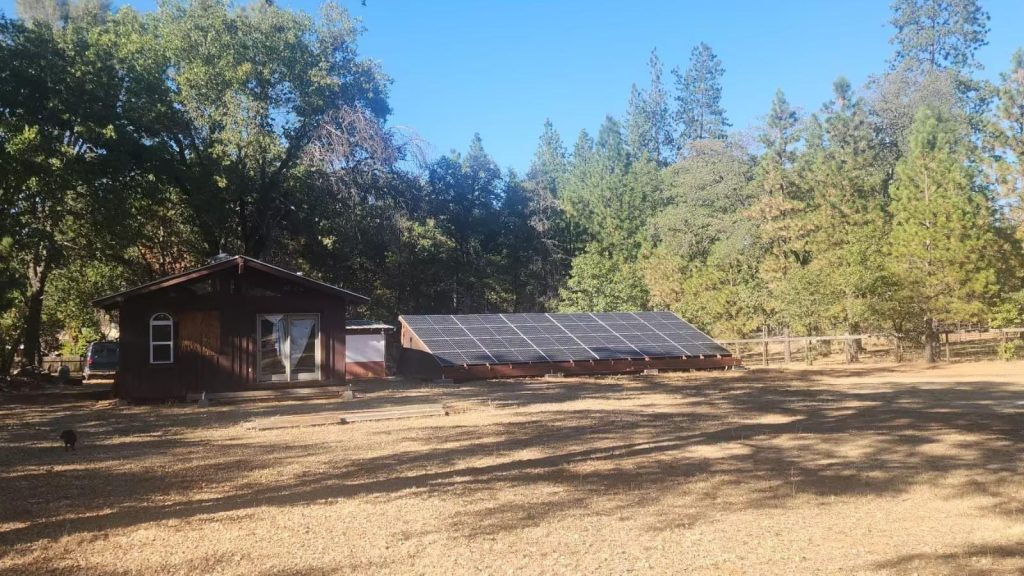
JSDSolar's listed kit contains twelve 580W modules, giving an installed PV capacity of 6.96kWp. The inverter's specified maximum PV input is 15kW, which should not be confused with the supplied array capacity.
During an outage, solar production can reduce battery discharge when sufficient irradiance is available.
Consider a 2kW AC load receiving 1kW of usable solar power. If the remaining 1kW comes from the battery, its discharge rate is substantially lower than during nighttime operation.
That benefit is conditional. Irradiance changes, hot module temperatures reduce output, and shading can restrict production across connected strings.
Equally as important, not all hybrid inverter configurations allow for the same PV operating behavior during grid conditions.
For project approval, be sure that the inverter can maintain solar generation in backup mode, and work in conjunction with the BMS to manage battery charging.
The array's energy production potential should not be used to justify predictable uninterrupted backup power.
5. What is the Best Way for Buyers to Verify Runtime Prior to Procurement?
Best to look up specs on the battery. The runtime should be verified under the expected operating conditions.
For a project using the JSDSolar 10kW system, the following should be requested:
•Battery Data Sheets: Ensure nominal voltage, energy, discharge limits, temperature restrictions and BMS protection are defined.
•Load-based autonomy: Perform a energy balance using the inverter losses, reserve, and expected starting state of charge.
•Backup operating constraints: Understand the transfer behavior, and inverter surge capacity.
•Evidence of commissioning: AC energy delivered and BMS/inverter protection events are to be logged during discharge.
A useful acceptance test ends when the protective cutoff is engaged or the backup reserve is fully discharged, not after a specified number of hours.
To have project-specific battery and inverter sizing performed, contact JSDSolar with your anticipated load schedule and backup time requirements.
FAQs
Q1. What is included in JSDSolar's 10kW Solar Panel System?
JSDSolar's kit includes twelve 580W monocrystalline panels, a 48V 200Ah lithium battery, a 10kW split-phase inverter, mounting brackets, distribution boxes, and PV cables.
Q2. How much energy does the JSDSolar 48V 200Ah battery store?
At the advertised 48V rating, the battery stores 9.6kWh nominally. With the listed 80% depth of discharge, approximately 7.68kWh is available on the DC side before conversion losses.
Q3. How long can the battery power a 1kW load?
Approximately 6.9 hours under illustrative assumptions of 80% DoD and 90% inverter efficiency, excluding standby losses. Actual runtime depends on battery voltage, condition, and operating load.
Q4. Can one 48V 200Ah battery supply the full 10kW inverter output?
Not necessarily. Supplying 10kW AC could require approximately 231A DC at 48V and 90% efficiency. The battery's continuous BMS discharge-current rating must be confirmed.
Q5. Why does JSDSolar specify a 10kW system with 6.96kW of panels?
The supplied twelve 580W panels total 6.96kWp. The inverter is rated at 10kW AC output. These represent different system capacities and should not be treated as interchangeable.


In This Article
- 1 1. How Much Usable Energy Does a 48V 200Ah Battery Provide?
- 2 2. What Backup Runtime Is Realistic at Different Loads?
- 3 3. Is the Battery able to Support the Inverter's Full 10kW Output?
- 4 4. How Much Can the Solar Array Extend Backup Runtime?
- 5 5. What is the Best Way for Buyers to Verify Runtime Prior to Procurement?